

Key Takeaways
- Choose a Florida elevator company with DBPR licensing, certified elevator technicians (CET), ample insurance, and local service hubs in major cities—ensuring code compliance, faster emergency response, and accountability throughout the installation process.
- Custom-manufactured elevators designed to fit your specific space are superior to cookie-cutter units that waste square footage and require costly framing changes, particularly important for Florida retrofit projects with existing architectural constraints.
- Florida's coastal environment demands corrosion-resistant materials, preventive maintenance plans, and direct access to parts inventory to combat salt air damage—making manufacturer-direct companies more reliable than those relying on overseas suppliers or subcontractors.
For Florida homeowners, installing a residential elevator is both a convenient upgrade and a strategic investment in accessibility, safety and long-term property value. Whether you're building a waterfront getaway in Miami or retrofitting a family home in Jacksonville, the unique architectural and environmental demands of the Sunshine State require a specialized approach.
To ensure your investment is code-compliant and built to last, you need a company that handles every stage of the process. A manufacturer-direct company provides a single point of accountability that encompasses engineering and manufacturing, as well as installation and ongoing service.
Critical Factors When Choosing a Florida Elevator Team
When vetting the best home elevator companies in Florida, look beyond the glossy brochures. You must verify the technical qualifications and logistical capabilities of the team that will be working in your home, such as:
License and Insurance Verification
Florida elevator safety is regulated by the Department of Business and Professional Regulation (DBPR). Companies must hold a license and have qualified employees. Verify that the installation crew will be acting under the supervision of a certified elevator technician (CET). This ensures the CET has undergone the rigorous training required to safely install complex lift systems.
A legitimate manufacturer will also carry ample liability insurance and workers' compensation coverage.
Service Radius and Response Time
Florida is a massive state. A company with a single office in Orlando may not be able to provide timely emergency service to a home in the Keys or Panhandle. The ideal choice is a company with established local service hubs in major metropolitan areas like Miami, Tampa and Jacksonville. Local technicians mean faster response times and lower travel costs for routine maintenance.
Customization vs. Cookie-Cutter Units
Some dealers sell standard-size elevators that force builders to construct the shaft to fit the elevator. This can result in wasted square footage and costly framing changes. A true manufacturer offers custom manufacturing and engineering services, allowing you to design the elevator cab to fit your specific available space down to the inch. This is particularly important for residential elevator retrofit projects in Florida with existing spaces that define the boundaries.
Understanding Florida Home Elevator Costs
Understanding the cost of a home elevator in Florida requires considering the total project scope. Most homeowners find that the investment is comparable to that of all major home appliances. The total price will vary based on whether it's a hydraulic or traction system, the number of stops and interior cab finishes. Retrofit projects generally cost more than new construction because they often require more complex labor, like cutting through existing floor slabs, rerouting HVAC or plumbing and building a shaft inside a finished home.
When requesting a quote, confirm the budget estimates include essential site work, such as:
- Electrical disconnects and wiring
- Framing and drywall for the hoistway
- Permitting fees
- Flooring and finish carpentry
A transparent manufacturer-direct estimate will help you identify these costs up front so there are no surprises during construction. For many homeowners, the cost is far lower than the expense and emotional toll of moving to a new house. According to a 2024 AARP report, the majority of adults over 50 want to remain in their current homes as they age. Installing a home elevator is a proactive step toward future-proofing your property and ensuring accessibility.
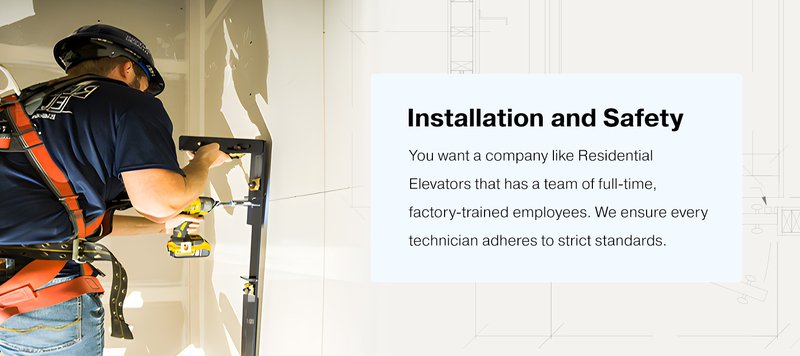
Installation and Safety
The quality of the home elevator installation is just as important as the quality of the machinery. Elevator companies that rely on subcontracted labor to handle fluctuating demand may lack deep familiarity with the specific product they're installing. This inconsistency can lead to safety gaps or a noisy, vibrating operation.
You want a company like Residential Elevators that has a team of full-time, factory-trained employees. We ensure every technician adheres to strict standards. A trustworthy company will demonstrate its expertise in the makes and models they install and will adhere to your local codes.
Long-term Maintenance and Reliability
The coastal environment makes home elevator maintenance in Florida a critical aspect of ownership. Here are some elevator maintenance factors to consider:
- Corrosion-resistance: Salt air can corrode electrical contacts and mechanical parts if they're not properly inspected or cleaned. Fasteners and components should be made of a corrosion-resistant material for longevity.
- Preventive upkeep: Reliability comes from preventive care. Manufacturer-direct companies offer comprehensive service plans that include annual safety inspections, lubrication and adjustments. These visits are vital for catching minor issues before they escalate into a system failure.
- Parts availability: One of the distinct advantages of choosing a US-based manufacturer is the supply chain. If a control board or hydraulic valve needs replacement, it ships directly from the factory. There's no waiting for months for a container to arrive from overseas, ensuring your elevator remains operational at all times.
FAQs About Home Elevators
Here are some commonly asked questions about installing an elevator in your home.
1. Will Medicare Pay for My Home Elevator?
Medicare generally does not pay for home elevators or lifts because they're classified as “convenience items” rather than covered medical necessities like durable medical equipment (DME). However, some private Medicare Advantage plans may offer extra benefits for home modifications.
Veterans may be eligible for the Home Improvements and Structural Alterations (HISA) grant to help offset some costs related to accessibility modifications like elevators.
2. Do I Need a Permit for My Home Elevator?
Yes. Elevator installations require a permit to ensure compliance with safety and building codes. The right elevator team will handle the permitting process and coordinate the required inspections for you.
3. Where Can I Put an Elevator in My Existing Home?
In most cases, you can install an elevator just about anywhere in your home, including closets, stairwell corners, garages and central areas like atriums for optimal accessibility. A quality elevator company can work with your home's layout and install an elevator where you envision it.
Why Residential Elevators Is Florida's Premier Choice
As a company with deep roots in the region, Residential Elevators combines national manufacturing power with local Florida service. Our local representatives and technicians are stationed throughout the state, ready to create a custom elevator solution for your home. Every cab is engineered to minimize construction costs and maximize usable interior space.
We stand by our transparent pricing. Our estimates are detailed and all-inclusive, ensuring you understand the full scope of your investment. Because we facilitate the entire process, from initial design to the final safety check, we provide a level of quality assurance that others simply cannot match.
Elevate Your Standard of Living With Residential Elevators
When it comes to your family's safety and your home's value, you can't afford to cut corners. Choose the safety, quality and accountability of a reliable family-owned business like Residential Elevators. Contact us today for a free, no-obligation consultation with your local representative. We'll help you take the first step toward a more accessible future.
Linked sources:
- https://www2.myfloridalicense.com/
- https://www.aarp.org/press/releases/2024-12-10-new-aarp-report-majority-adults-50-plus-age-place-policies-communities-catch-up/
- https://www.medicare.gov/publications/11045-medicare-coverage-of-dme-and-other-devices.pdf
- https://www.residentialelevators.com/blog/cost-to-install-a-home-elevator/
- https://www.prosthetics.va.gov/psas/HISA2.asp
- https://www.residentialelevators.com/get-an-estimate/